Featured post

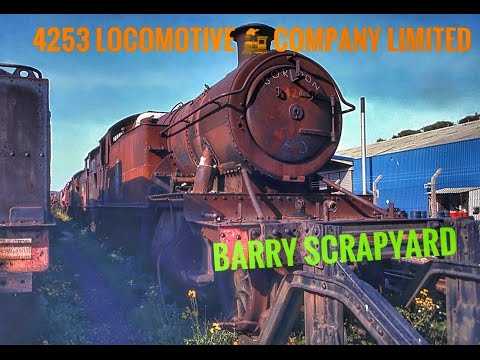
Abandoned and Disused at Barry Scrapyard to the Kent and East Sussex Railway 4253

A Old Abandoned Rusty Train In Barry Scrapyard.  now plan are at thought to rebuild the loco to support the future extension of KES...

Showing posts with label sussex. Show all posts

Thursday, 4 May 2017

Foxcote Manor Society, And the Kent and East Sussex Railway largest locomotive to visit the line

Day 6 of foxy on the KESR

The Great Western Railway steam locomotive no. 7822 Foxcote Manor is a 4-6-0 Manor Class locomotive, built in 1950 at Swindon Works. It is part of a post-war batch of 10 locomotives, which follows on from 20 earlier locomotives built in 1938.

FOXCOTE MANOR STEAMING OUT OF TENTERDEN


The locomotive was originally allocated to Oswestry depot, where it was used to haul both passenger and freight services over lines such as the Cambrian Line and the now-closed Ruabon Barmouth Line. It regularly hauled the "Cambrian Coast Express" from Shrewsbury to Aberystwyth. It was also allocated to Chester shed during its lifespan.


It was withdrawn in 1965 from Shrewsbury and was towed to Woodham Brothers scrapyard in Barry, South Wales.It languished there until 1974 when it was rescued for preservation. It was initially taken to Oswestry for restoration work, but is now based on the Llangollen Railway, a restored part of the Ruabon Barmouth Line, and it has seen regular services on the Llangollen Railway and has been on loan to the West Somerset Railway, Gloucestershire & Warwickshire Railway, South Devon Railway, Keighley and Worth Valley Railway, Great Central Railway (Nottingham) and even The North Yorkshire Moors Railway.


7822 returned to service in early 2016 following heavy boiler repairs and can be seen regularly operating at Llangollen.

Wednesday, 3 May 2017

Pensioners Treat Kent & East Sussex Railway Tenterden

Selected dates in May, July and September 2017 


Pensioners Treat, an opportunity for those aged 60 & over to travel at specially discounted fares. Travel by steam train through the picturesque countryside with the Kent & East Sussex Railway and if you are aged 60 or over take advantage of the special price of £13. Travel Card which allows all day travel. Adult Travel Cards are normally £18.


Everyone travelling on the railway can enjoy a relaxing steam train ride in beautifully restored carriages as the train takes passengers on a 21 mile return journey through Tenterden, Northiam and Bodiam stations. The return journey from Tenterden to Bodiam takes around 1 hour 45 minutes.

Visitors can choose to pre-order a delicious cream tea or ploughman’s lunch to enjoy during the trip and if grandchildren come along there is a children’s munch box option available. There will also be a warm welcome for visitors choosing to dine in the railway’s licensed restaurant at Tenterden station where you will find a choice of daily specials and a children’s menu.
 

Tenterden station is a short walk from the idyllic high street in Tenterden with its beautiful Georgian and Victorian buildings which is home to attractive boutiques, quaint antique shops and attractive cafes and restaurants.

At Bodiam station passengers can choose to take the short walk to Bodiam Castle and explore the romantic ruins, moat and impressive ramparts with their breathtaking views across the surrounding countryside.

For those who love to picnic, the railway offers an alfresco lunch option and pre-ordered picnic hamper can be ready to collect when you arrive at Tenterden station complete with napkins, cutlery and condiments.

The railway’s facilities have been carefully designed with disabled, elderly and less mobile visitors in mind. There are parking spaces for Blue Badge holders next to the platform at Tenterden Town and Northiam stations, and accessible toilets at Tenterden, Northiam and Bodiam stations. The railway has a specially designed coach for wheelchair users called ‘Petros’ which is fitted with ramped access, wide aisles, an accessible toilet and moveable seating. There is full wheelchair access to the shop and restaurant at Tenterden Town, and the Colonel Stephens Railway Museum has level access with 42” space aisles.

When at Tenterden Station why not visit the Colonel Stephens Railway Museum? Colonel Holman Fred Stephens was an English eccentric, a brilliant railway engineer, and the man who built the Kent & East Sussex Railway (and amazingly 16 other light railways). His legacy is commemorated in the award-winning museum next to Tenterden Town Station. Open every afternoon when trains are running and entry is FREE with your ticket

Well-behaved dogs on leads can travel on the railway for £3 on normal operating days (excluding Day Out With Thomas and Santa Special event days).
to book follow the link below to the Kent And East Sussex website


Dates for May


Thursday, 4 May 201710:30 AM  -Tuesday, 9 May 201710:30 AM  -Wednesday, 10 May 201710:30 AM  -Thursday, 11 May 201710:30 AM  -Tuesday, 16 May 201710:30 AM  -Wednesday, 17 May 201710:30 AM  -Thursday, 18 May 201710:30 AM  -Wednesday, 24 May 201710:30 AM  -Thursday, 25 May 201710:30 AM  -

Sunday, 30 April 2017

VISITING ENGINE - 7822 FOXCOTE MANOR outings this weekend on the Kent and East Sussex RAILWAY

VISITING ENGINE - 7822 FOXCOTE MANOR DATES FOR THE KENT AND EAST SUSSEX REVEALED


Saturday 6th May - Green Service  Departures from Tenterden:  10:40, 13:15, 15:35
Sunday 7th May - Green Service  Departures from Tenterden:  10:30, 13:15, 15:35
Saturday 13th May - Green Service  Departures from Tenterden:  10:40, 13:15, 15:35
Sunday 14th May Manors in Miniature at Bodiam - Red Service  Departures from Tenterden:  11:45, 14:20
Saturday 20th May 1940s weekend - Gold Service  Departures from Tenterden:  11:30, 13:45, 16:00
Sunday 21st May 1940s weekend - Gold Service  Departures from Tenterden:  11:30, 13:45, 16:00
Saturday 27th May - Red Service  Departures from Tenterden: 10:40, 13:15, 15:35
Sunday 28th May - Red Service  Departures from Tenterden: 10:40, 13:15, 15:35
Monday 29th May - Made In Swindon - Gold Service Departures from Tenterden:  11:30, 13:45, 16:00

DISCLAIMER - Every effort will be made to provide the advertised services but unforseen circumstances may entail alterations and cancellations at short notice.

THE LOCOMOTIVES IN TEST FOR THREE DAYS 

GWR 7800 Class 7822 Fox-cote Manor STEAMING out of Tenterden Station on the Kent and East Sussex Railway

The Great Western Railway steam locomotive no. 7822 Foxcote Manor is a 4-6-0 Manor Class locomotive, built in 1950 at Swindon Works. It is part of a post-war batch of 10 locomotives, which follows on from 20 earlier locomotives built in 1938.


The locomotive was originally allocated to Oswestry depot, where it was used to haul both passenger and freight services over lines such as the Cambrian Line and the now-closed Ruabon Barmouth Line. It regularly hauled the "Cambrian Coast Express" from Shrewsbury to Aberystwyth. It was also allocated to Chester shed during its lifespan.


It was withdrawn in 1965 from Shrewsbury and was towed to Woodham Brothers scrapyard in Barry, South Wales.It languished there until 1974 when it was rescued for preservation. It was initially taken to Oswestry for restoration work, but is now based on the Llangollen Railway, a restored part of the Ruabon Barmouth Line, and it has seen regular services on the Llangollen Railway and has been on loan to the West Somerset Railway, Gloucestershire & Warwickshire Railway, South Devon Railway, Keighley and Worth Valley Railway, Great Central Railway (Nottingham) and even The North Yorkshire Moors Railway.
7822 returned to service in early 2016 following heavy boiler repairs and can be seen regularly operating at Llangollen.


Thursday, 16 March 2017

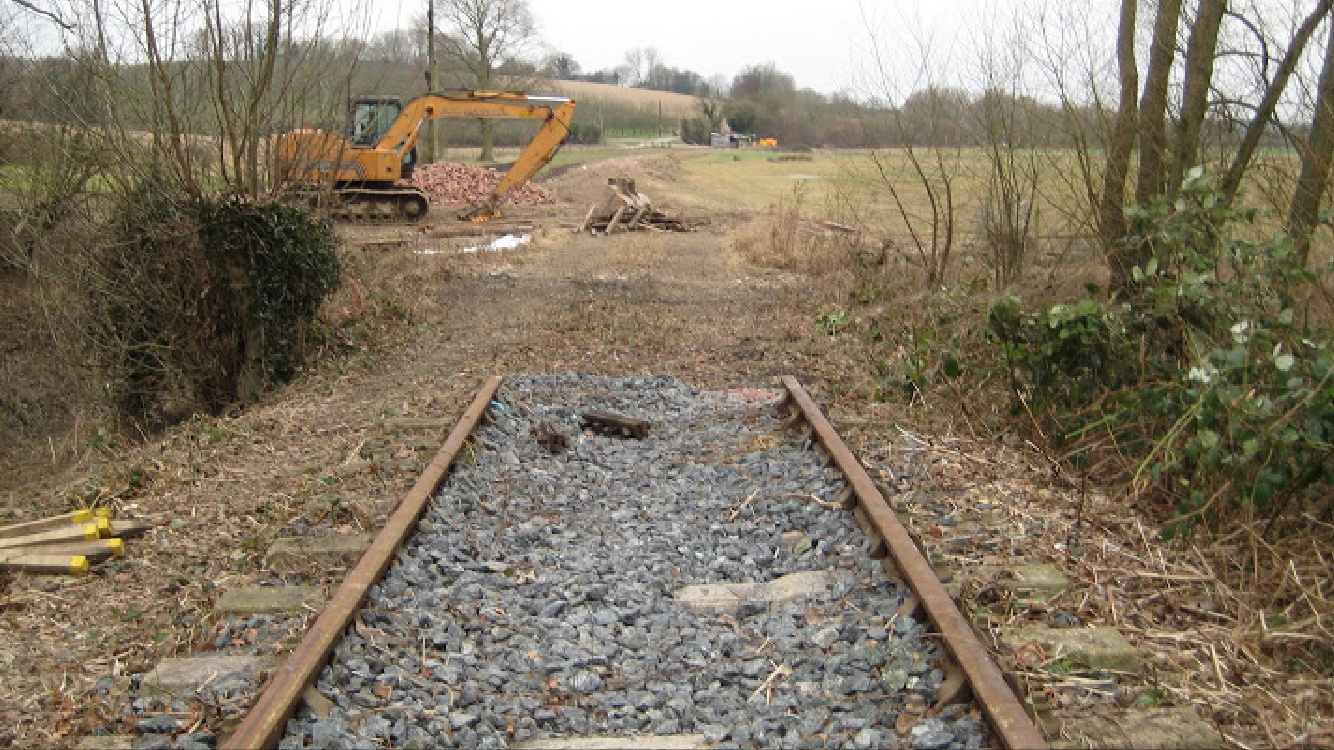
Kent and East Sussex Railway and Rother Valley Railway Extension to Udiam Farm from Bodiam

Kent and East Sussex Railway and Rother Valley Railway Extension to Udiam Farm from Bodiam

The Rother Valley Railway, a preservation group set up in 1991, had by March 2009 laid track from Bodiam to within 200 yards (180 m) of the site of Junction Road Halt at a cost of £200,000.

Track was relaid through the site of the halt in June 2010.
On 18 March 2011, a VIP dining special was the first passenger train to traverse the rebuilt line.
The following weekend of 19/20 March saw Kent and East Sussex Railway services run as far as Junction Road

Friday, 3 March 2017

Derelict carriages on the Kent & East Sussex Railway


One of the endearing features of most preserved railways is the various coaches,wagons and trains to be seen from the train,why your sitting there having your cream tea .or stretching your legs for a walk around Wittersham road.


  Inevitably they are in various states of repair. and now thanks to the Rother Valley Railway
the kent and east sussex railway has a large facility  .


The building was paid for by The  Rother Valley Railway, who are working on laying track towards Bodiam from Robertsbridge to give the a connection from Tenterden with Network Rail. 


The carriage storage facility  won an award from the Institute of Civil Engineers, partly due to it being built for the relatively small amount of £500,000.


Thursday, 2 March 2017

Wittersham Road . and the World war 2 big guns at the Kent and East Sussex Railway


the original station site was largely cleared by British Railways


But for the reopening in 1978 the railway provided a station platform using coping stones from Heathfield station in Sussex.


The platform footpath is flanked by railings retrieved from Cranbrook, another station on a Stephens' railway, and lamp standards from Ashurst and Cowden. The Station nameboard also originated from Cranbrook. The signal box is a Saxby and Farmer type 5 box from Deal Junction, Dover built about 1882 and transported here for the opening of the rebuilt station. The yard here is somewhat extended from its old role as a busy agricultural goods yard and is currently used as the Permanent Way Headquarters for the Railway and as a relatively vandal free storage site for rolling stock in need of renovation.

The station building is set at right angles to the line and closely resembles the original but came from the Cambrian Railways at Borth in West Wales where it had been since the 1890's. Opposite this building across the station yard, where stock coming to and from the railway is loaded, is a relic of World War II. By the picnic site the small Blockhouse was built as an ammunition store for one of a pair of 'super heavy' 9.2" rail-mounted guns that were based on the railway from February 1941 to 8th August 1944. They had a range of some 20 miles and would have been used to fire on the beaches edging Romney Marsh in the event of invasion.

Tuesday, 28 February 2017

Abandoned Railway tunnel - St Michaels Tunnel on the Kent and East Sussex Railway


The line was engineered and operated by Colonel H F Stephens. One of his 'bigger' feats was St Michaels Tunnel, located just north of the halt. Opened in 1905 as part of an extension from Tenterden to Headcorn, it is just 31 yards in length and curves to the east on a radius of approximately 30 chains.


Comprising a single platform and small corrugated hut, the modest halt at St Michaels was added to the Kent & East Sussex Light Railway in 1912.


Provided by colonel Stephens Museum

To serve a small community on the outskirts of Tenterden. Its ticket office - if you could call it that - closed in 1938 and the local infrastructure's decline continued until services were withdrawn on 4th January 1954.


The portals are neat, brick-built affairs with a masonry string course and copings. Wing walls extend outwards parallel to the track - the east-side wall at the south end is cracked top to bottom. Horseshoe shaped in profile, the lining comprises four rings of brick and features a single refuge. Timber brackets supported telegraph wires.


Provided by colonel Stephens Museum
Despite 60 years of redundancy, the structure remains in fair condition except for the cracked wing wall and some spalling of the north portal's headwall. The interior has found function as a wood store, used by the householder whose property it stands on.
 Abandoned Railway tunnel - St Michaels Tunnel on the Kent and East Sussex Railway 

Provided by colonel Stephens Museum
 Abandoned Railway tunnel - St Michaels Tunnel on the Kent and East Sussex Railway 


Thursday, 23 February 2017

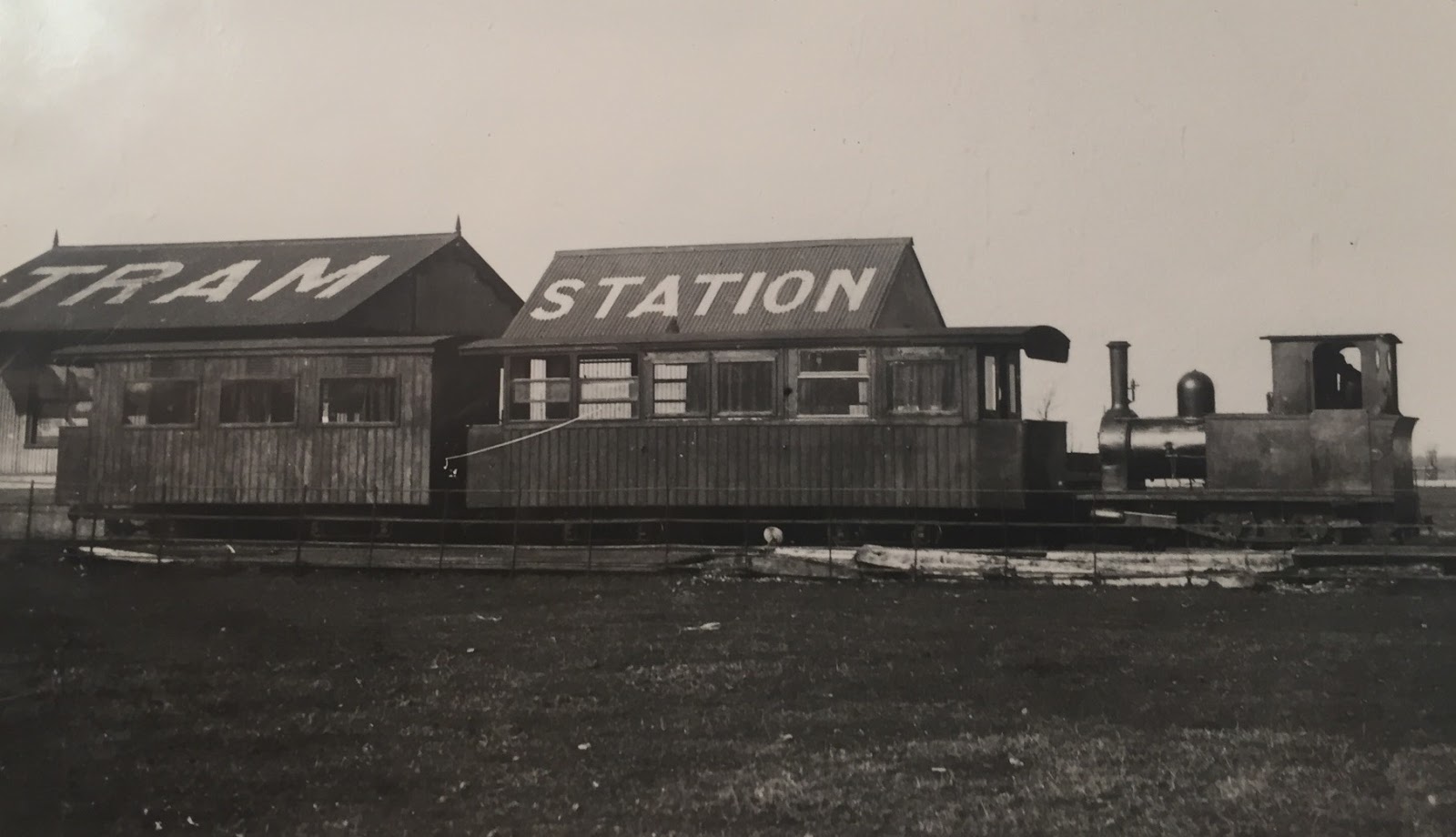
Camber golf links, Rye and Camber Tramway was a railway in East Sussex

Camber golf links, Rye and Camber Tramway was a railway in East Sussex

in 1895 the Rye and Camber Tramway was opened to connect Rye with a new golf course at Camber. 
Rye Tramway

Designed to cater for the transportation needs of golfers and their caddies, the steam railway also took fishermen from Rye to their fishing boats moored opposite Rye Harbour village, where a river ferry could be hailed.
Rye (Tramway top right )


The line's promoters cunningly decided to build the line entirely on private land, thereby avoiding the necessity of having to obtain an Act of Parliament. 


Built to a 3ft gauge with economy in mind, the 1.75 mile line ran parallel to the River Rother from its Rye terminus as far as Broadwater Beach, before heading across Northpoint beach and terminating opposite Rye Harbour Village


The track was spiked directly to wooden sleepers to save cost, and there was two loops at each end of the line to let the engines run around the coaches.

you tube clip of the tramway

The two termini were both built of corrugated iron and wood, offering a canopy, waiting room and booking office. 

With only one engine in steam at any given point, there was no need for signalling. 


When it opened on Saturday, 13th July, 1895, the line was equipped with one steam engine and a passenger coach, divided into first and second class compartments. 

The engine, named 'Camber' and accompanying carriage were built by W.G.Bagnall Limited of Stafford. 

Although capable of better things, the engine normally sauntered around the track at a stately 10mph, pulling a three ton passenger car.

The coach, divided into first and second class sections, was around twenty-six feet long with entrance platforms at each end. 

The first class portion could accommodate 12 passengers and came with cushioned seats and curtains, while the cheapskates in second class had to make do with longitudinal strip-wood seating . 
 

Traffic was encouraging, with 18,000 tickets being sold in the first six months, prompting the company to invest in a second, more powerful, steam engine in 1897, patriotically named 'Victoria'. 

The company continued to prosper, adding a half mile extension to a deserted location at Camber Sands on 13th July, 1908. 


The station was extremely low on facilities, offering nothing more than a raised platform made from old standard gauge sleepers, with a small hut being added later. 

Endeavouring to make the most of its remote location, the timetable described the station as being 'far from the madding crowd' and a perfect location for picnics. 

With the extension complete, the original Camber terminus was renamed as Golf Links, and the service ramped up in the summer months to 13 trains each way daily, of which only seven ran through to Camber Sands. 

A special Saturday late night train ran for golfers at 8:15pm. 
In the winter months, the service was cut back to seven trains each way daily, nine trips on Saturdays and four on Sunday, with all trains terminating at the Golf Links station. 

Road competition, rising coal prices and high maintenance costs forced economies on the line in the 1920s, with the steam locomotives being replaced by a four wheeled petrol tractor in 1924. 
 The winter service was abandoned completely in 1925-6 and a long period of decline set in. 

With the outbreak of war in 1939, the line was closed to the public and used by various military and naval purposes. 

 Unhappily, the track and rolling stock was in such dreadful condition at the end of the war that the company decided to wind up the railway forever. 

Although the Golf Links/Camber station has survived remarkably well for a corrugated iron structure, no trace remains of the Rye terminus or the station at Camber Sands. 


the last remains of the tramway

colonel stephens museam Tenterden


Wednesday, 22 February 2017

St Michaels Tunnel (A forgotten relic) shoreham lane Tenterden kent USA

St Michaels Tunnel the forgotten relic of the Kent and East Sussex Railway
Add caption

 One of his 'bigger' feats was St Michaels Tunnel, located just north of the halt. Opened in 1905 as part of an extension from Tenterden to Headcorn, it is just 31 yards in length and curves to the east on a radius of approximately 30 chains.The portals are neat, brick-built affairs with a masonry string course and copings. Wing walls extend outwards parallel to the track - the east-side wall at the south end is cracked top to bottom. Horseshoe shaped in profile, the lining comprises four rings of brick and features a single refuge. Timber brackets supported telegraph wires.
now a back garden
Despite almost 60 years of redundancy, the structure remains in fair condition except for the cracked wing wall and some spalling of the north portal's headwall. The interior has found function as a wood store, used by the householder whose property it stands on.
a train running through the tunnel


Tuesday, 21 February 2017

Rother Valley Railway

RVR Rother Valley Railway Restoring the Missing link 2017 Rother Valley Railway KESR to RVR

The Rother Valley Railway (RVR) is a heritage railway project based at Robertsbridge in East Sussex, England. It takes its name from the original name for what later became the Kent and East Sussex Railway, running from Robertsbridge through to Headcorn in Kent, via Tenterden. The project is to replace the ‘missing link’ between Robertsbridge, a station on the Tonbridge to Hastings mainline, and Bodiam on the Kent and East Sussex Railway, a heritage railway which operates from Bodiam to Tenterden. A charity supported by a society of volunteers are attempting to re-establish the railway link. The RVR began by reinstating the first few hundred yards of line eastwards from Robertsbridge, and also a short stretch westwards from Bodiam. In 2010, the latter section was further extended to reach Junction Road. In summer 2011 work began at Robertsbridge to extend further eastwards to Northbridge Street, which entailed the rebuilding of five bridges. By June 2012, this further extension was also completed. In September 2013, a Gala weekend at Robertsbridge marked the progress to date and the start of the next phase - the re-instatement of the section between Northbridge Street and Junction Road, for which statutory permissions are being sought. While the RVR does not yet feature regular passenger trains, the base at Robertsbridge houses a small shop and visitor centre open to the public each Sunday, utilising a building formerly used as the London terminus of the Orient Express. There is also a small collection of historic railway vehicles in various stages of preservation.
Drone footage of RVR
Pictures by https://www.facebook.com/Frame-Me-Ple....
RVR website http://www.rvr.org.uk
KESR website http://www.kesr.org

Popular Posts