Featured post

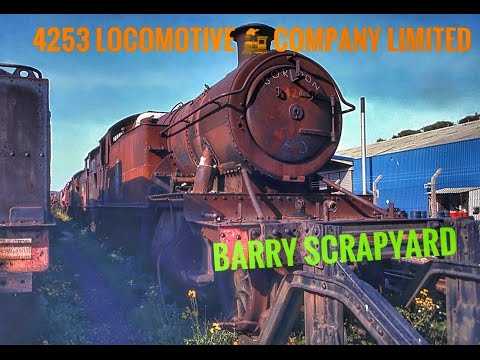
Abandoned and Disused at Barry Scrapyard to the Kent and East Sussex Railway 4253

A Old Abandoned Rusty Train In Barry Scrapyard.  now plan are at thought to rebuild the loco to support the future extension of KES...

Showing posts with label K&ESR. Show all posts

Thursday, 27 April 2017

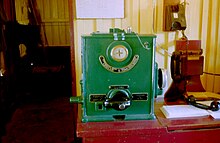
How a token works on the Kent and East Sussex Railway

 railway signalling, a token is a physical object which a locomotive driver is required to have or see before entering onto a particular section of single track. The token is clearly endorsed with the names of the section it belongs to. A token system is used for single lines because of the very much greater risk of serious collision in the event of irregular working by signalmen or traincrews, than on double lines. 


The operation of a bidirectional single track line has obvious problems, the most serious of which is the possibility of two trains traversing the line travelling towards each other, each driver unaware that the other is using the line. The simplest method of controlling such a line is to have only one engine operational, on the basis that a single train cannot collide with itself .


EditThe token system was developed in Britain in the 19th century, to facilitate safe working of single-line railways. If a branch line is a dead end with a simple shuttle train service, then a single token is sufficient. The driver of any train entering the branch line (or occupying any part of it) must be in possession of the token, and no collision with another train is possible.


Edit

Staff and ticketEdit

Using only a single token does not provide convenient operation when consecutive trains are to be worked in the same direction. The simple token system was therefore extended: if one train was to be followed by another in the same direction, the driver of the first train was required to be shown the token, but not take possession of it (in theory he was supposed to physically touch the token, but this was not strictly followed). He was given a written authority to enter the single line section, referred to as the ticket. He could then proceed, and a second train could follow. In the earliest days the second train could proceed after a designated time interval, as on double lines at the time. However, following the Armagh rail disaster of 1889, block working became mandatory.
Seeing the train staff provided assurance that there could be no head-on collision. To ensure that the ticket is not issued incorrectly, a book of numbered tickets is kept in a locked box, the key to which is permanently fastened to the token, or is the token. In addition, the lock prevents the token being removed until the ticket box is closed, and it cannot be closed unless the book of tickets is in the box. Once a ticket is issued, its number is recorded in a Train Register book, and the token is locked in a secure place. This system is known as staff and ticket.
In a variation on this principle, called divisible train staff, a section of the token referred to as the ticket portionwas designed to be removed and handed to the driver instead of a paper ticket.

Electric token


The staff and ticket system was still too inflexible for busy lines, as it did not allow for the situation where the train intended to carry the actual token was cancelled or running very late. To provide for this, the electric train token system was developed. Each single-line section is provided with a pair of token instruments, one at the signal box at each end. A supply of identical tokens is stored in the instruments, which are connected by telegraph lines. A token can be removed from one instrument only if both signalmen co-operate in agreeing to the release. Once a token has been removed, another cannot be removed until the token which is "out" is replaced in either instrument. (There are variations on this sequence of events.) By this means, it can be ensured that at any one time, only one token is available to be issued to a driver. Tokens belonging to adjacent sections have different configurations to prevent them being inserted into the wrong instrument.
Nevertheless, in the Abermule train collision in 1921, lax working procedures allowed the safeguards provided by the electric token system to be circumvented; a driver was handed a token for the wrong section, and proceeded on the mistaken belief that the token was correct. To prevent this, it became a requirement in the UK for the signals controlling entry to the single line section (starting or section signals) to be locked at danger unless a token has been released from the relevant token instrument.

Friday, 31 March 2017

GWR LOCOMOTIVE 0-6-2T NO: 5668 on the Kent and East Sussex Railway

https://framemeplease19.wixsite.com/trackbedwalker


This locomotive, was built at Swindon in 1926 and spent its working life in and around  Cardiff Valley hauling both freight and passenger trains.  Like many others, 5668 ended up sold to Woodham’s  scrap yard at Barry in November 1964 as steam was phased out in favour of diesel. 


It languished there, slowly losing parts, until rescued  and moved to the Pontypool & Blaenavon Railway in 1987.


https://framemeplease19.wixsite.com/trackbedwalker

  A very similar story to that of GWR 4253.


https://framemeplease19.wixsite.com/trackbedwalker
Towards the end of 2012
The kent and East Sussex Railway offered this locomotive as part of a package deal involving a substantial quantity of parts that were required to progress the restoration of 4253.


The agreement was that The 4253 Locomotive Company Limited would undertake the restoration of 5668 but that no work would commence until such time as 4253 had been completed and returned to steam.


Wednesday, 29 March 2017

BR(W) 0-6-0PT No 1638 pannier tank steaming through the Morghew park eastate Tenterden 

History
The 16xx class of pannier tanks was the last GWR locomotive design to appear, in BR days, and replaced earlier pannier tanks.


They were built to a restricted loading gauge, which allowed them to work on lines with low bridges. Most were allocated to Wales, although two, remarkably, ended up in Scotland and others were allocated to Cornwall.
Sole survivor No. 1638 was built by BR at Swindon in 1951, being allocated to Llanelli shed to work the Burry Port and Gwendraeth Valley line. She was withdrawn from Croes Newydd in North Wales in August 1966 after that shed had been transferred from the Western Region to the London Midland Region of British Railways. 

She was purchased privately and travelled to Buckfastleigh in November 1967 and was a regular performer on the line.
When the South Devon Railway Trust took over operation of the line in 1991, 1638 was hired from its owners, the Dart Valley Railway Co, and operated the first trains under SDR auspices. 
In 1992, the DVR decided to put the locomotive up for sale. The newly formed SDRT did not have the wherewithal to purchase this unique engine and she was subsequently sold to the Kent & East Sussex Railway where she can be see today ...

Saturday, 25 March 2017

GWR LOCOMOTIVE 0-6-2T NO: 5668 on the Kent and East Sussex Railway

This locomotive, was built at Swindon in 1926 and spent its working life in and around  Cardiff Valley hauling both freight and passenger trains.  Like many others, 5668 ended up sold to Woodham’s  scrap yard at Barry in November 1964 as steam was phased out in favour of diesel.  It languished there, slowly losing parts, until rescued  and moved to the Pontypool & Blaenavon Railway in 1987.  A very similar story to that of GWR 4253.

Towards the end of 2012
The kent and East Sussex Railway offered this locomotive as part of a package deal involving a substantial quantity of parts that were required to progress the restoration of 4253.

The agreement was that The 4253 Locomotive Company Limited would undertake the restoration of 5668 but that no work would commence until such time as 4253 had been completed and returned to steam.

At the 2013 AGM, shareholders voted in favour of proceeding with the deal and suggested an appeal be launched to raise funds to pay for the transportation of the loco from Blaenavon to Rolvenden.  In excess of £2.6k was raised and, in late 2013, 5668 was moved to its new home.

Although no restoration work will begin for some years, it is important that the loco does not deteriorate
5668 was moved to Rolvenden yard where it was cleaned up and greased as necessary to provide some protection.
 It has now been carefully sheeted and returned to Wittersham Road siding for storage to await its turn to be bought back to life.

As a result of this deal our railway, the Kent & East Sussex, will be assured that yet another powerful steam locomotive will be added to its fleet in due course to haul passenger trains on the extended line from Tenterden to Robertsbridge

Sunday, 19 March 2017

Ford Bth


In 1931 the Ford Motor Company ordered from the British Thompson Houston Company (BTH) three diesel-electric shunting locomotives for use at their new car plant at Dagenham in Essex. They were intended for hauling hot metal and slag ladles and to carry out general shunting operations between the Company's jetty on the River Thames and the Tilbury main line, a distance of about one mile. Since they were required to work across the main line to the Company's sidings on the north side, they were built to the LMS loading gauge. These locomotives owed something to an American ‘switcher' design which first appeared on the Central Railroad of New Jersey in 1925 and which were used at Fords American plant.
At the time of building they were
unique in Britain and created considerable interest at home and abroad. Locomotive frames and bodies, of all steel construction, were produced at the Sheffield works of the Metropolitan Vickers Electrical Co. Ltd. The engines, manufactured by W. H. Allen Sons & Co. Ltd of Bedford, were supplied to the BTH works at Rugby. The original specifications noted that the locomotives would have a weight of 44 tons and be provided with one 150 hp engine, coupled to a generator powering four traction motors, one to each axle. American fixed-pattern buckeye couplers were fitted. The locomotives were also fitted with sanding equipment, automatic bell, air whistles and a ‘dead-man's' handle to the driver's master controller. Driving cabs were provided at each end with an open platform for the shunter to ride on in safety. Finally, the specification stated "all materials will be of British manufacture..." Upon completion in 1932 the locomotives were turned out with Oxford blue bodies, gold lining round battery box covers and windows, dark grey roofs and black platforms, underframes and bogies.
https://framemeplease19.wixsite.com/trackbedwalker
The locomotives worked for 34 years at Dagenham, during which time each one is estimated to have run well in excess of 250,000 hours. Maintenance staff expected them to run without any major failures between annual overhauls. Just after world war 2 the diesel power units were stripped down, for the only time, for rebuild and it was found that less than 0.005 inches had to be removed from the crankshaft journals to restore them to true.
Ford No. 1 was acquired for the K&ESR in 1966 through the generosity of AEI Ltd (successors to BTH) but fitted with the engine from No. 2 which had been previously been cannibalised for spares. Arrival at Tenterden was on 7th July 1966, the locomotive being in green livery and having still been in use by Ford just two days previously.
After arrival, the buckeye couplings were replaced with screw couplings. In 1967 No. 40 (at first numbered 16) earned its keep on hire to work the mill siding at Robertsbridge. In February 1972 it hauled the last train from Robertsbridge to Bodiam prior to the dismantling of that section.

From 1976 the locomotive was the subject of an exhaustive rebuilding. Much of the bodywork was replaced, the generator completely overhauled by a contractor and all electrical components renovated or replaced. A vacuum exhauster was installed and the existing air brake pipework either replaced or adapted to allow the locomotive air brake to work in conjunction with the train vacuum brake. The fan and the cooling radiator were also overhauled. Refurbishment of the bogies and traction motors together with re-profiling of the wheel sets, was completed in 1983.
No. 40 was re-commissioned during 1986. It saw occasional service on passenger trains between Wittersham Road and Hexden bridge during times of high fire risk, but more usually worked permanent way works trains or as yard pilot at Tenterden. It was now again turned out in the Oxford blue livery also appropriate for the K&ESR. Following derailment during work on the extension to Northiam, suspicion fell on the locomotive's springing. No. 40 was accordingly laid aside during 1989. It was returned to operating condition in 2000 but is only used on special occasions because of its great age & operational limitation.
https://framemeplease19.wixsite.com/trackbedwalker

Friday, 17 March 2017

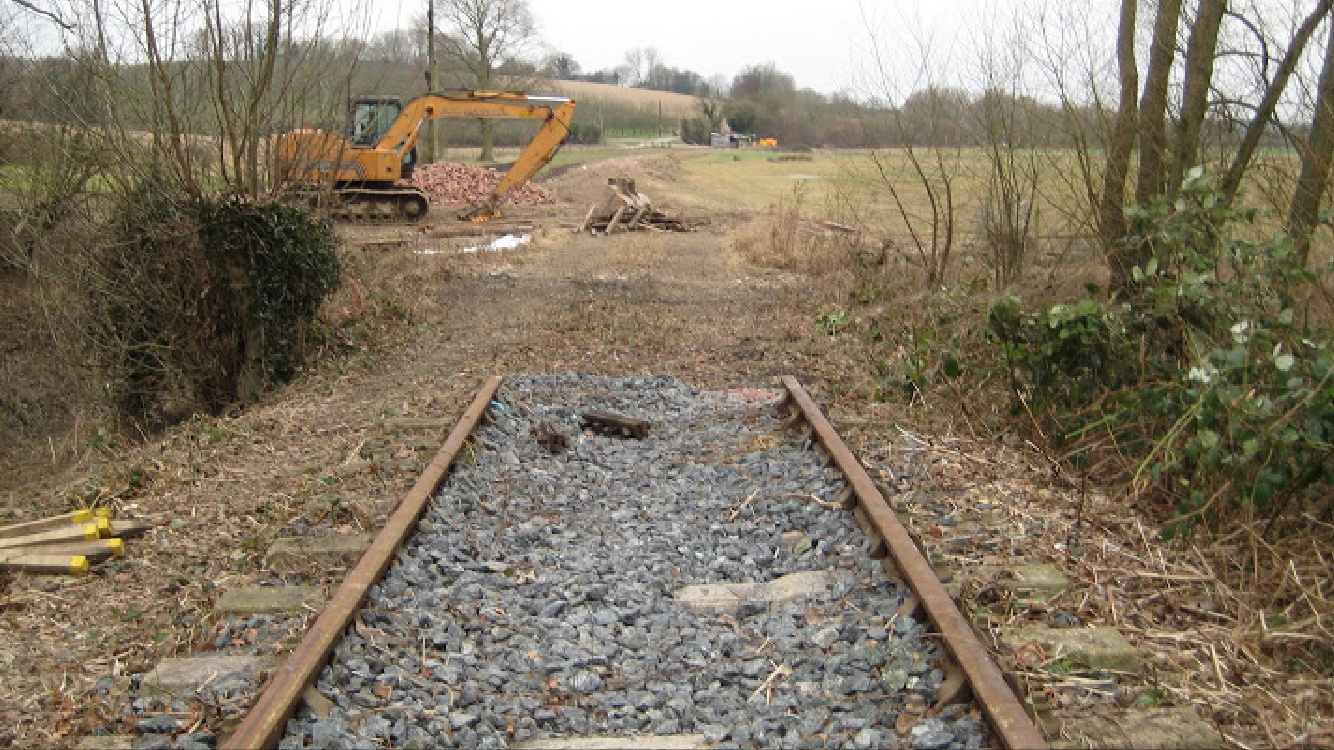
The Planning Permission for the reinstatement of the railway line from Robertsbridge to Bodiam HAS BEEN APPROVED! "WOW"

GREAT NEWS

Well done all involved

But there is a lot of hard work a head still ? after walking the old trackbeds recently
im sure the restoration work donewill be first class . just looking at the work done between Bodiam and Udiam Farm
and then we can all look forward

Thursday, 16 March 2017

Kent and East Sussex Railway and Rother Valley Railway Extension to Udiam Farm from Bodiam

Kent and East Sussex Railway and Rother Valley Railway Extension to Udiam Farm from Bodiam

The Rother Valley Railway, a preservation group set up in 1991, had by March 2009 laid track from Bodiam to within 200 yards (180 m) of the site of Junction Road Halt at a cost of £200,000.

Track was relaid through the site of the halt in June 2010.
On 18 March 2011, a VIP dining special was the first passenger train to traverse the rebuilt line.
The following weekend of 19/20 March saw Kent and East Sussex Railway services run as far as Junction Road

Wednesday, 15 March 2017

The Rye and Camber Tramway

https://framemeplease19.wixsite.com/trackbedwalker
The Rye and Camber Tramway was a railway in East Sussex.
https://framemeplease19.wixsite.com/trackbedwalker


https://framemeplease19.wixsite.com/trackbedwalker


 It was of 3 ft (914 mm) narrow gauge, relatively unusual amongst British narrow gauge railways. It operated from 1895 until 1939, connecting Rye to the coast. It was about 1 3⁄4 miles (2.8 km) in length, and had three stations - Rye, Golf Links and Camber Sands. It operated mainly to transport golfers to the golf links and holidaymakers to the coastal dunes.
 3⁄4 miles (2.8 km) in length, and had three stations - Rye, Golf Links and Camber Sands. It operated mainly to transport golfers to the golf links and holidaymakers to the coastal dunes.

The railway was constructed between January and July 1895 and ran entirely on private land. It was the first designed by consulting engineer Colonel Holman F. Stephens, who went on to build and run small railways all over the Country.
https://framemeplease19.wixsite.com/trackbedwalker

The line was built to convey golfers to the Rye Golf Club and ran from Rye station to the golf club. In 1908 the first extension to Camber Sands station was opened and the intermediate station renamed "Golf Links". Camber terminal was moved to a more accessible site and a tea hut was opened at the end of summer 1938, but this only used for a few months as the war intervened the next year.
https://framemeplease19.wixsite.com/trackbedwalker
Although initially quite successful, increasing competition from automobile and bus transport eventually caused the tramway to enter a gradual economic decline, as was the case with many small railways. Passenger service was ended at the outbreak of World War II but it was extensively used by the Government to convey parts for the P.L.U.T.O. (Pipe Line Under The Ocean) project for which a special siding leading to a new pier near Golf Links Station was constructed by Canadian troops.

The line was in such a run-down a condition by the end of the war that it was deemed irrecoverable and was sold for scrap in 1947. The Rye & Camber Tramways Co. Ltd was liquidated in February 1949.
Remains
A number of relics, including the frame and bogies of one of the carriages, can be seen at the Colonel Stephens Museum at Tenterden.
Golf Links station building survives virtually intact. Some track is embedded in concrete near the station as the trackbed was used as a roadway during wartime. Most of the route is a footpath, although a short section has been destroyed by gravel workings.
The line plays a prominent part in several novels by Rye resident E.F. Benson.
https://framemeplease19.wixsite.com/trackbedwalker
x

U.SA Tank of the Kent and East Sussex Railway No. 65 ,DS 237 No. 22. climbing Tenterden bank

Built for the United States Army Corps of Engineers as No 1968, and sent to the UK under Lend-Lease. Stored at Newbury Racecourse. One of fourteen purchased by the Southern Railway and sent to the Melbourne Military Railway for running in. Entered service with the Southern Railway in November 1947 as USA Class number 65. Renumbered 30065 by British Railways. Worked at Southampton Docks. Withdrawn, and entered Departmental service as DS237 at Ashford Wagon Works. Withdrawn in April 1967 and sold to Woodham Brothers, Barry, Wales in March 1968. Developed a hot box en route and dumped at Tonbridge. Sold to K&ESR in August 1968 and delivered the next month. arriving at Rolvenden a month later became  DS 237 No. 22.

No. 22 was the first large locomotive in service in 1974, proving itself very capable of hauling five coach trains up Tenterden bank. She was fitted with an extended bunker and a improved lubrication to overcome its bearing problems. In 1978 it exchanged boilers with No. 21 and after overhaul re-entered service in April 1981 in black livery lined out in red. Various mechanical problems occurred and were overcome before the boiler certificate again expired and the locomotive was taken out of traffic at the end of the 1990 season. Another extensive overhaul followed, the locomotive re-entering service as Southern Railway No. 65 in the summer of 1997. Its original post-war livery of black with sunshine lettering was now carried. However by 2002 a new firebox was required. This was fitted and a further overhaul undertaken the engine returning to service in 2008. has been  withdraw service on 1st January 2017 when its boiler certificate expired 

Popular Posts