Featured post

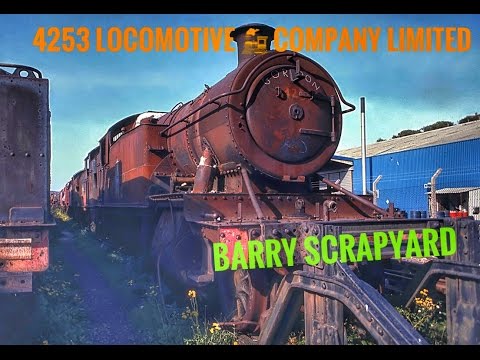
Abandoned and Disused at Barry Scrapyard to the Kent and East Sussex Railway 4253

A Old Abandoned Rusty Train In Barry Scrapyard.  now plan are at thought to rebuild the loco to support the future extension of KES...

Showing posts with label Ashford. Show all posts

Tuesday, 4 April 2017

Lydd Town Station (formely Lydd Station) April 2017 VISIT

Urban Exploration: Abandoned Train Station in Lydd Kent .
APRIL2017

One of my favourite abandoned stations
Lydd Town Station (formerly Lydd Station) (Closed) and Lydd Town Crossing
Opened on 7 December 1881 as Lydd Station, on 4 July 1937 the station was renamed Lydd Town to prevent confusion with a newly opened station at Lydd-on-Sea.

THIS VIDEO WAS SHOT IN APRIL 2017


APRIL 2017

https://framemeplease19.wixsite.com/trackbedwalker
Lydd Town Station was a substantial facility, with a large goods yard and much passenger and freight traffic generated by nearby army camps. A branch ran south from the goods yard into the army camps, which were served by Lydd Military Railway. A passing loop was provided at the station, but this has subsequently been lifted. The station was closed to passenger traffic on 6 March 1967 and to freight on 4 October 1971. Part of the site is now used as a recycling facility. There is a possibility that gravel extraction will restart south of the station, and, if so, the passing loop may be reinstated to allow locomotives to change ends and shunt the train.


If open today Lydd Town Station would serve a growing town, which is just south west of the site, and a short extension to the line could also provide much improved transport facilities to Lydd Airport (also known as London Ashford), linking directly to Ashford International Station.


The branch actually runs south east from Appledore. The convention adopted in these collections is that Appledore is north, Dungeness is south, the New Romney side of the branch is east, and the Lydd side of the branch
Urban exploring is a great way to explore your local community

i would recommended a GO PRO  https://www.amazon.co.uk/gp/product/B00O46894K/ref=as_li_qf_sp_asin_il_tl?ie=UTF8&camp=1634&creative=6738&creativeASIN=B00O46894K&linkCode=as2&tag=trackwalke-21
https://framemeplease19.wixsite.com/trackbedwalker


https://framemeplease19.wixsite.com/trackbedwalker

https://framemeplease19.wixsite.com/trackbedwalker

Wednesday, 29 March 2017

Ashford railway works . A Disused and Abandoned site in New Town Ashford Kent UK

LATE MARCH 2017

Ashford locomotive works was built by the South Eastern Railway on a new 185-acre (75 ha) site in 1847, replacing an earlier locomotive repair facility at New Cross in London.[1] By 1850 over 130 houses had been built for staff (called Alfred Town by the railway but New Town by everybody else),The works employed about 600 people in 1851 increasing to about 950 by 1861, and around 1,300 by 1882.  A carriage and wagon works was opened on an adjacent 32-acre (13 ha) site in 1850.


South Eastern and Chatham RailwayOn 1 January 1899, the railway entered into a working union with the London Chatham and Dover Railway, forming the South Eastern and Chatham Railway (SECR).[5][6] Each antecedent company had its own locomotive works, but Ashford was larger than Longhedge works and so became the principal locomotive works for the new organisation. The latter facility was gradually run down and converted into a subsidiary works.


Southern Railway and British Railways

Following the grouping of the SECR with the London, Brighton and South Coast Railway and the London and South Western Railway to form the Southern Railway on 1 January 1923, most new locomotive and carriage design and construction was transferred to the more modern facilities at Eastleigh Works. Nevertheless, Ashford continued to operate both building and servicing locomotives and wagons until well after the nationalisation of the railways to form British Railways in 1948.


The locomotive workshops eventually closed on 16 June 1962, the last locomotive to be repaired at Ashford being N class 2-6-0 no. 31400 on 9 June.[9] The wagon works continued for a further two decades[4] producing continental ferry vans, Freightliner vehicles, merry-go-round coal hopper wagons and the Cartic4 articulated car transporter.[10] [8] It became one of BREL's main wagon works, but as trade declined it operated on an ever-decreasing scale until it closed down in 1982

Saturday, 11 March 2017

The Colonel Terriers . Kent & East Sussex Railway (Rother Valley Railway)

The K&ESR owned two Terriers, the first bought in May 1901 and the second in February 1905, becoming No.3 “Bodiam” and No.5 “Rolvenden” respectively. Both were from the initial batch of six engines, four of which eventually came to Stephens’ railways. “Rolvenden”, the former LB&SCR No.71, had the honour of being the first Terrier built. “Bodiam”, although having the first number of the batch as LB&SCR No.70, was actually the last, having bequeathed her cylinders to 71, when a faulty casting had delayed her introduction into service (strange how these sisters were twinned from birth).
from the framemeplease collection


Both engines were painted in Stephens’ favourite blue livery with red lining, but without a polished dome. With regular overhauls, including that of “Bodiam” at Eastleigh in 1919 and “Rolvenden” at Brighton in 1917, they gave excellent service until the depression years.

from the framemeplease collection

 They were alike as two peas for much of their lives together even to the near simultaneous acquisition of three rail coal bunker extensions (the LB&SCR extensions had four); the only difference being a long-strapped A1X type door carried by “Rolvenden”, probably acquired at Brighton. Although the two Ilfracombe Goods engines acquired in 1910 and 1914 became the favoured engines, the Terriers were the mainstay of the line in the Edwardian era, and much used thereafter.

Both engines seem to have received their last partial re-tube in late 1928, with “Bodiam” falling into disuse around the time of the railway’s receivership in 1931. (There is photographic evidence of her apparently in steam questionably dated as 12th September in that year.) “Rolvenden” seems to have lasted a little longer. They were then dumped in the works yard but “Bodiam” was resurrected in 1933 and repaired over the next two years, mainly by a Southern Railway fitter at weekends. Although much reported, there is little evidence, apart from anecdotal, to suggest that she incorporated many major parts from her sister, except possibly her tanks.

However some Terrier parts most certainly came from the Shropshire & Montgomery Terriers mentioned below. In the process “Bodiam” acquired her enlarged and distinctive bunker. Re-entering service on 27th December 1934, she was repainted in a bright apple green with yellow lining and, according to Austen’s usual practice, lost her nameplate becoming simply No.3, with the company’s initials appearing on the tank side above the number. Officially withdrawn in 1937, the hulk of “Rolvenden” was finally disposed of by T W Ward in October 1938.
from the framemeplease collection

“Bodiam” was replaced by a hired Terrier when its boiler gave out in September 1940. She was out of use until repaired in February 1943 with an A1X pattern boiler and smokebox. She may also have been fitted at this time with the S&MR’s Dido’s tanks acquired in 1941 (see below). Re-boilering was a difficult job for Rolvenden Works, so two K&ESR fitters undertook the work at St Leonards Shed under wartime’s cooperative arrangements. Finished in April 1943 the engine became to all intents and purposes an A1X, whilst retaining the sandboxes on the front splasher like some earlier Isle of Wight rebuilds. Some reports suggest that she did not return home until 7th March 18944 but this cannot now be verified. Further repairs were carried out at Brighton Works in September 1947 where she was repainted a darker green. After Nationalisation, the
engine was taken into British Railways’ stock and further repaired at Ashford in the second half of 1949; remarkably she was repainted again in apple green with yellow ling but as British Railways No.32670.
From then on she worked on the K&ESR until dieselisation; then working at Newhaven and elsewhere [including Hayling Island] with occasional returns including the last day special. She returned in 1964, to preservation – a true living embodiment of the continuity of the K&ESR – on whose metals she has been present for all but 9 of its 105 years of operation.
Thanks to Colonel Stephens Archives at the Kent and East Sussex Railway

Friday, 3 March 2017

The engine that brought down a German Bomber , Lydd Station

The engine that brought down a German Bomber , Lydd Station
On 27 November, a train came under attack by two Focke-Wulf 190s. The train, hauled by Southern Railway D3 number 2365 which was just departing from Lydd Town railway station, had its boiler hit. The resulting jet of high pressure steam from the engine hit the plane, causing it to crash-land nearby; the pilot was found dead, but no railway staff or passengers were injured. The two planes had been heading over the coast after a raid on Ashford.


A local newspaper reported that it was the New Romney line’s most famous day when a train brought down an enemy fighter! On 27th November 1942 a train hauled by an ex-LBSCR D3 class locomotive was attacked by a low-flying German fighter aircraft. A cannon shell from the ‘plane burst the D3’s boiler just as the plane flew 20 feet above. The plane crashed, the pilot was killed whilst the train and driver survived! The loco was rebuilt and back in service by 11th March


LYDD TODAY

Tuesday, 28 February 2017

Abandoned Railway tunnel - St Michaels Tunnel on the Kent and East Sussex Railway


The line was engineered and operated by Colonel H F Stephens. One of his 'bigger' feats was St Michaels Tunnel, located just north of the halt. Opened in 1905 as part of an extension from Tenterden to Headcorn, it is just 31 yards in length and curves to the east on a radius of approximately 30 chains.


Comprising a single platform and small corrugated hut, the modest halt at St Michaels was added to the Kent & East Sussex Light Railway in 1912.


Provided by colonel Stephens Museum

To serve a small community on the outskirts of Tenterden. Its ticket office - if you could call it that - closed in 1938 and the local infrastructure's decline continued until services were withdrawn on 4th January 1954.


The portals are neat, brick-built affairs with a masonry string course and copings. Wing walls extend outwards parallel to the track - the east-side wall at the south end is cracked top to bottom. Horseshoe shaped in profile, the lining comprises four rings of brick and features a single refuge. Timber brackets supported telegraph wires.


Provided by colonel Stephens Museum
Despite 60 years of redundancy, the structure remains in fair condition except for the cracked wing wall and some spalling of the north portal's headwall. The interior has found function as a wood store, used by the householder whose property it stands on.
 Abandoned Railway tunnel - St Michaels Tunnel on the Kent and East Sussex Railway 

Provided by colonel Stephens Museum
 Abandoned Railway tunnel - St Michaels Tunnel on the Kent and East Sussex Railway 


Monday, 27 February 2017

Dungeness (SER) railway station Disused and abandoned


                          Dungeness (SER) railway station Disused and abandoned


Dungeness was the terminus of the Lydd Railway Company's branch from Appledore which opened on 7 December 1881. Passenger services initially terminated at Lydd, although a goods service operated as far as Dungeness. 


Opened to passengers on the 1st April 1883, the single platform terminus at Dungeness lay at the end of a branch line from the South Eastern Railway's station at Appledore. 


Dungeness railway station, 1905 


Built by the Lydd Railway Company, the service was provided by the South Eastern Railway who eventually absorbed the smaller company in 1895. 


The eight mile branch had no less than 12 level crossings, with stations at Appledore, Brookland Halt, Lydd Town, (Lydd-on-Sea Halt and Greatstone-on-Sea Halt from 4 July 1937) and New Romney & Littlestone-on-Sea and Dungeness. 

https://framemeplease19.wixsite.com/trackbedwalker
A large army camp and military ranges at Lydd kept the line busy until the end of WW1, but by the 1920's Dungeness was served by just three trains a day, while New Romney station enjoyed 9 trains a day. 
https://framemeplease19.wixsite.com/trackbedwalker


A realignment of the line along the coast to New Romney in 1937, saw passenger services being withdrawn from Dungeness on the 4th July, 1937

The growing popularity of driving a car saw passenger numbers rapidly decline along the rest of the line in the 1950s, with the Dungeness freight service being withdrawn in 1952. 

Work on the Dungeness Nuclear Power Station in the early Sixties brought a new, albeit brief, lease of life to the line, with two-car diesel-electric trains providing 11 trains a day in 1962, most running through to Ashford. 

Proposed for closure in the infamous Beeching Report of 1963, passenger services managed to cling on to life until the 6th March 1967, with goods services to New Romney already being withdrawn three years earlier. 


Goods services to Lydd continued until 1971, with the line remaining in use for the removal of ballast aggregates and waste from Dungeness B nuclear power station. 


All track beyond Romney Junction has now been lifted with the remaining track only seeing very occasional troop trains and railtours. 
https://framemeplease19.wixsite.com/trackbedwalker


Saturday, 25 February 2017

Disused , Abandoned Lydd Town Station (formerly Lydd Station)

                     Disused , Abandoned   Lydd Town Station (formerly Lydd Station)


You Tube 

Opened on 7 December 1881 as Lydd Station, on 4 July 1937 the station was renamed Lydd
Town to prevent confusion with a newly opened station at Lydd-on-Sea.
google photo


 One of my favourite abandoned stations 
Lydd Town Station (formerly Lydd Station) (Closed) and Lydd Town Crossing


Opened on 7 December 1881 as Lydd Station, on 4 July 1937 the station was renamed Lydd Town to prevent confusion with a newly opened station at Lydd-on-Sea


Lydd Town Station was a substantial facility, with a large goods yard and much passenger and freight traffic generated by nearby army camps. 


A branch ran south from the goods yard into the army camps, which were served by Lydd Military Railway.


 A passing loop was provided at the station, but this has subsequently been lifted. The station was closed to passenger traffic on 6 March 1967 and to freight on 4 October 1971. Part of the site is now used as a recycling facility.
PHOTO Framemepleae2017


The passing loop was reinstated to allow locomotives to change ends and shunt the train.


The Lydd Railway Company's 11-mile branch to Dungeness opened to freight services in December 1881. Initially passenger trains terminated at Lydd. The line's promoters hoped that creating a rail link between London and Dungeness would lead to the development of a port from which cross-channel steamers could operate. But this grand plan failed to materialise and the branch was left to stagnate. It did though carry some shingle traffic as well as flints for the Potteries where they were used to glaze china. Many army trains travelled to Lydd where a private military railway system had a connection onto the main line.

The branch actually runs south east from Appledore. The convention adopted in these collections is that Appledore is north, Dungeness is south, the New Romney side of the branch is east, and the Lydd side of the branch 


PHOTO Framemepleae2017

PHOTO Framemepleae2017

PHOTO Framemepleae2017

PHOTO Framemepleae2017

PHOTO Framemepleae2017

PHOTO Framemepleae2017

Wednesday, 22 February 2017

St Michaels Tunnel (A forgotten relic) shoreham lane Tenterden kent USA

St Michaels Tunnel the forgotten relic of the Kent and East Sussex Railway
Add caption

 One of his 'bigger' feats was St Michaels Tunnel, located just north of the halt. Opened in 1905 as part of an extension from Tenterden to Headcorn, it is just 31 yards in length and curves to the east on a radius of approximately 30 chains.The portals are neat, brick-built affairs with a masonry string course and copings. Wing walls extend outwards parallel to the track - the east-side wall at the south end is cracked top to bottom. Horseshoe shaped in profile, the lining comprises four rings of brick and features a single refuge. Timber brackets supported telegraph wires.
now a back garden
Despite almost 60 years of redundancy, the structure remains in fair condition except for the cracked wing wall and some spalling of the north portal's headwall. The interior has found function as a wood store, used by the householder whose property it stands on.
a train running through the tunnel


Popular Posts