Featured post

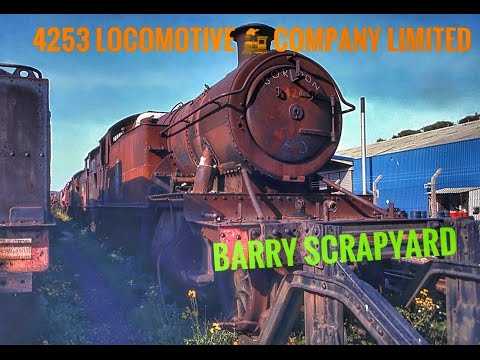
Abandoned and Disused at Barry Scrapyard to the Kent and East Sussex Railway 4253

A Old Abandoned Rusty Train In Barry Scrapyard.  now plan are at thought to rebuild the loco to support the future extension of KES...

Showing posts with label dover. Show all posts

Saturday, 25 March 2017

GWR LOCOMOTIVE 0-6-2T NO: 5668 on the Kent and East Sussex Railway

This locomotive, was built at Swindon in 1926 and spent its working life in and around  Cardiff Valley hauling both freight and passenger trains.  Like many others, 5668 ended up sold to Woodham’s  scrap yard at Barry in November 1964 as steam was phased out in favour of diesel.  It languished there, slowly losing parts, until rescued  and moved to the Pontypool & Blaenavon Railway in 1987.  A very similar story to that of GWR 4253.

Towards the end of 2012
The kent and East Sussex Railway offered this locomotive as part of a package deal involving a substantial quantity of parts that were required to progress the restoration of 4253.

The agreement was that The 4253 Locomotive Company Limited would undertake the restoration of 5668 but that no work would commence until such time as 4253 had been completed and returned to steam.

At the 2013 AGM, shareholders voted in favour of proceeding with the deal and suggested an appeal be launched to raise funds to pay for the transportation of the loco from Blaenavon to Rolvenden.  In excess of £2.6k was raised and, in late 2013, 5668 was moved to its new home.

Although no restoration work will begin for some years, it is important that the loco does not deteriorate
5668 was moved to Rolvenden yard where it was cleaned up and greased as necessary to provide some protection.
 It has now been carefully sheeted and returned to Wittersham Road siding for storage to await its turn to be bought back to life.

As a result of this deal our railway, the Kent & East Sussex, will be assured that yet another powerful steam locomotive will be added to its fleet in due course to haul passenger trains on the extended line from Tenterden to Robertsbridge

Thursday, 16 March 2017

The History of Lydd Airport formerly known as Ferryfield


The History of Lydd Airport formerly known as Ferryfield


The History of Lydd Airport formerly known as Ferryfield


Lydd Airport, opened in 1954, was the first airport to be built in the UK following the end of the Second World War.It was built for Silver City Airways as an all-weather replacement operating base to that of nearby Lympne Airport, whose grass runway was often waterlogged in rainy weather.

https://framemeplease19.wixsite.com/trackbedwalker
The new Lydd  Ferryfield was, like Lympne, used initially for car carrying air ferry services using Bristol Freighters, operating principally to Le Touquet in France.

https://framemeplease19.wixsite.com/trackbedwalker

It was opened by the Duke of Edinburgh 
 Within 5 years of opening, it was handling over 250,000 passengers annually, making it one of the busiest airports in the UK.


in the early 1970s the advent of the Hovercraft and roll-on-roll-off ferries led to a decline of the air ferry services from Lydd although other passenger and freight operations continued.
https://framemeplease19.wixsite.com/trackbedwalker
during the 1980s the airport was bought by Hards Travel from Solihull, who used the airport  as its base for its holiday operations to Spain, Italy and Austria, using Dart Herald and Viscount aircraft flying to Beauvais in France, where customers were transferred to coaches for the remainder of the journey. During this time Hards operated 14 flights a day from the airport, and used the large fields surrounding the airport for car parking.

https://framemeplease19.wixsite.com/trackbedwalker

Lydd Airport future 
a statement from there website 

We want to offer local people the chance to go on holiday or business from their local airport without the hassle and expense of flying from the London Airports which are becoming increasingly congested along with the roads that serve them.The developments will help to create much needed employment on the Romney Marsh. Strict environmental controls will ensure that the special flora and fauna of Dungeness will continue to be protected or enhanced, and noise levels and aircraft numbers will be capped. Flying hours will be limited to 0700-2300, i.e. no night flights. Road infrastructure will be improved too.


ps i recomended the ham egg and chips in biggles 
Thanks for reading my website https://framemeplease19.wixsite.com/trackbedwalker

Popular Posts