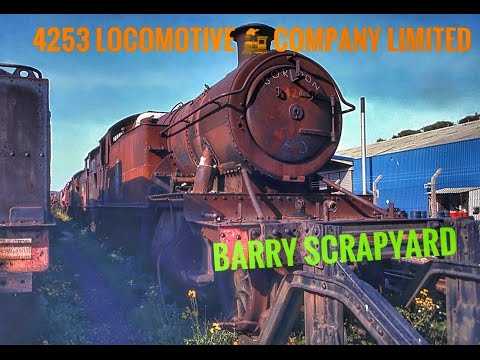
Its easy to take for granted the awesome endeavors of 19th Century railway pioneers which thread us through, around or over the nation's natural barriers. It was an age of speculative adventure, built on innovation, will power and elbow grease.
But many magnificent creations were abandoned during the industrial vandalism of the Fifties and Sixties.
today armed with my go pro
and my cannon
we capture these forgotten,abandoned and disused relics
The Rother Valley Railway, a preservation group set up in 1991
And by March 2009 they had laid track from Bodiam to within 200 yards (180 m) of the site of Junction Road Halt at a cost of £200,000.
Track was relaid through the site of the halt in June 2010. On 18 March 2011, a VIP dining special was the first passenger train to traverse the rebuilt line. The following weekend of 19/20 March saw Kent and East Sussex Railway services run as far as Junction Road Now planning is agree , take a look at the next stages
In 1931 the Ford Motor Company ordered from the British Thompson Houston Company (BTH) three diesel-electric shunting locomotives for use at their new car plant at Dagenham in Essex. They were intended for hauling hot metal and slag ladles and to carry out general shunting operations between the Company's jetty on the River Thames and the Tilbury main line, a distance of about one mile. Since they were required to work across the main line to the Company's sidings on the north side, they were built to the LMS loading gauge. These locomotives owed something to an American ‘switcher' design which first appeared on the Central Railroad of New Jersey in 1925 and which were used at Fords American plant.
At the time of building they were
unique in Britain and created considerable interest at home and abroad. Locomotive frames and bodies, of all steel construction, were produced at the Sheffield works of the Metropolitan Vickers Electrical Co. Ltd. The engines, manufactured by W. H. Allen Sons & Co. Ltd of Bedford, were supplied to the BTH works at Rugby. The original specifications noted that the locomotives would have a weight of 44 tons and be provided with one 150 hp engine, coupled to a generator powering four traction motors, one to each axle. American fixed-pattern buckeye couplers were fitted. The locomotives were also fitted with sanding equipment, automatic bell, air whistles and a ‘dead-man's' handle to the driver's master controller. Driving cabs were provided at each end with an open platform for the shunter to ride on in safety. Finally, the specification stated "all materials will be of British manufacture..." Upon completion in 1932 the locomotives were turned out with Oxford blue bodies, gold lining round battery box covers and windows, dark grey roofs and black platforms, underframes and bogies.
The locomotives worked for 34 years at Dagenham, during which time each one is estimated to have run well in excess of 250,000 hours. Maintenance staff expected them to run without any major failures between annual overhauls. Just after world war 2 the diesel power units were stripped down, for the only time, for rebuild and it was found that less than 0.005 inches had to be removed from the crankshaft journals to restore them to true.
Ford No. 1 was acquired for the K&ESR in 1966 through the generosity of AEI Ltd (successors to BTH) but fitted with the engine from No. 2 which had been previously been cannibalised for spares. Arrival at Tenterden was on 7th July 1966, the locomotive being in green livery and having still been in use by Ford just two days previously.
After arrival, the buckeye couplings were replaced with screw couplings. In 1967 No. 40 (at first numbered 16) earned its keep on hire to work the mill siding at Robertsbridge. In February 1972 it hauled the last train from Robertsbridge to Bodiam prior to the dismantling of that section.
From 1976 the locomotive was the subject of an exhaustive rebuilding. Much of the bodywork was replaced, the generator completely overhauled by a contractor and all electrical components renovated or replaced. A vacuum exhauster was installed and the existing air brake pipework either replaced or adapted to allow the locomotive air brake to work in conjunction with the train vacuum brake. The fan and the cooling radiator were also overhauled. Refurbishment of the bogies and traction motors together with re-profiling of the wheel sets, was completed in 1983.
No. 40 was re-commissioned during 1986. It saw occasional service on passenger trains between Wittersham Road and Hexden bridge during times of high fire risk, but more usually worked permanent way works trains or as yard pilot at Tenterden. It was now again turned out in the Oxford blue livery also appropriate for the K&ESR. Following derailment during work on the extension to Northiam, suspicion fell on the locomotive's springing. No. 40 was accordingly laid aside during 1989. It was returned to operating condition in 2000 but is only used on special occasions because of its great age & operational limitation.
S.C.A.T.S.Animal Feed Mill Local History There has been a mill on the site since 1380 using water power.There is still a water wheel under the present mill.The old mill building was rebuilt in 1880 following a fire.
The site has stood empty for almost 17 years, but now developers Stiles Harold Williams have unveiled ambitious plans to rejuvenate the derelict eyesore.
As well as 95 homes - ranging from five bedroom houses to retirement flats to starter homes - the development will include commercial space, to be used for offices or healthcare.
The Oast House has been earmarked for use as a potential art gallery or museum and there are hopes to reinstate the traditional roof, which was previously damaged by fire.
And now with planning permission granted for the Rother Valley Railway
had by March 2009 laid track from Bodiam to within 200 yards (180 m) of the site of Junction Road Haltat a cost of £200,000 .
Track was relaid through the site of the halt in June 2010. On 18 March 2011, a VIP dining special was the first passenger train to traverse the rebuilt line. The following weekend of 19/20 March saw Kent and East Sussex Railway services run as far as Junction Road