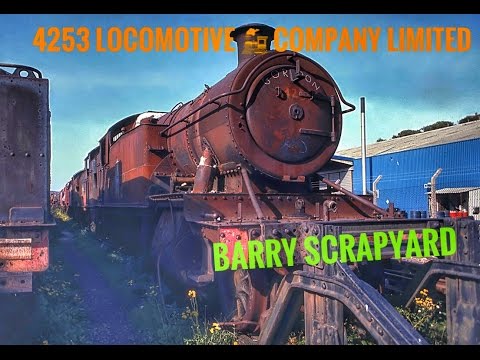
Its easy to take for granted the awesome endeavors of 19th Century railway pioneers which thread us through, around or over the nation's natural barriers. It was an age of speculative adventure, built on innovation, will power and elbow grease.
But many magnificent creations were abandoned during the industrial vandalism of the Fifties and Sixties.
today armed with my go pro
and my cannon
we capture these forgotten,abandoned and disused relics
Current Running Number: -Owned By: Privately ownedStatus: Awaiting restoration
Built: BR Darlington 1964
Train Heat: Boiler (isolated)
Current Livery: - Train Brake: Dual (air & vac)Current Name:Works number DEL174/1961.
Allocations
D7594 was new to Nottingham (16A) on June 3rd 1964. Further transfers were: July 1964 to Derby (16C).
January 1965 to Nottingham Division (D16).
March 1967 to London Midland (Midland) Lines.
June 1968 to Longsight (9A).
June 1968 to Manchester Division (D09).
May 1973 to Longsight.
August 1975 to Eastfield.
January 1982 stored serviceable, then reinstated to Eastfield during the same month.
October 1982 to Longsight.
May 1984 to Cricklewood.
November 1984 to Crewe.
Withdrawn July 28th 1986. Renumbered October 30th 1973.
The Colonel Stephens Railway Museum records the career of Holman Fred Stephens, light railway 🚃
The Colonel Stephens Railway Museum records the career of Holman Fred Stephens, light railway promoter, engineer and manager, his family, his railways and his successors.
The museum is based at Tenterden station on the Kent & East Sussex Railway, which was the quintessential Stephens' light railway and was always the heart of his empire.
The collection began in the 1960s largely through the foresight of Philip Shaw, the Kent and East Sussex Railways Historian, who began putting aside items donated by former employees of the Stephen's empire. W H Austen junior in particular, was a considerable source of material, much of which he had inherited from his father.
Hidden behind the public display is the heart of the research section, the historical papers and undisplayed artifacts dating from about the 1880s occupy 20 steel cabinet filing drawers and some 60 metres of racking.
The photographic archive is considerable, though seldom are we given original negatives. Although never counted, there are probably somewhere between 3,000 and 4,000 photographs, the earliest of which were in the Colonels collection.