A little known lost railway in Sussex is the former Rye and Camber Tramway, which operated for 44 years as a passenger service from 1895 until the outbreak of World War II. At that point the railway passed into military hands for use with the PLUTO project designed to supply the front line troops for the D Day landings.
this video tells you all
Sadly the state it was returned to the owners in meant that it was no longer in a fit state to carry passengers and it was therefore closed for good as the cost of renewing the track was prohibitive. Yet, at its height this remarkable railway carried as many as 18000 passengers during a six month period. Designed and built by the famous light railway builder Colonel Holman Stephens, the railway ran for about three miles from the eastern edge of Rye to a rather inconvenient location at the western edge of Camber. It was intended to carry passengers to the seaside, but also to a nearby golf club for which an intermediate station was built.
As with many Colonel Stephens’ railways, the line was built on a shoestring and this rather contributed to its untimely end.It also meant that once gone, few reminders of its existence still remain.Yet, remarkably despite all this most of the trackbed is still available for walking.
so if you need a little Sunday walk i recommend it
Urban Exploration: Abandoned Train Station in Lydd Kent . APRIL2017
One of my favourite abandoned stations Lydd Town Station (formerly Lydd Station) (Closed) and Lydd Town Crossing Opened on 7 December 1881 as Lydd Station, on 4 July 1937 the station was renamed Lydd Town to prevent confusion with a newly opened station at Lydd-on-Sea.
Lydd Town Station was a substantial facility, with a large goods yard and much passenger and freight traffic generated by nearby army camps. A branch ran south from the goods yard into the army camps, which were served by Lydd Military Railway. A passing loop was provided at the station, but this has subsequently been lifted. The station was closed to passenger traffic on 6 March 1967 and to freight on 4 October 1971. Part of the site is now used as a recycling facility. There is a possibility that gravel extraction will restart south of the station, and, if so, the passing loop may be reinstated to allow locomotives to change ends and shunt the train.
If open today Lydd Town Station would serve a growing town, which is just south west of the site, and a short extension to the line could also provide much improved transport facilities to Lydd Airport (also known as London Ashford), linking directly to Ashford International Station.
The branch actually runs south east from Appledore. The convention adopted in these collections is that Appledore is north, Dungeness is south, the New Romney side of the branch is east, and the Lydd side of the branch Urban exploring is a great way to explore your local community i would recommended a GO PRO https://www.amazon.co.uk/gp/product/B00O46894K/ref=as_li_qf_sp_asin_il_tl?ie=UTF8&camp=1634&creative=6738&creativeASIN=B00O46894K&linkCode=as2&tag=trackwalke-21
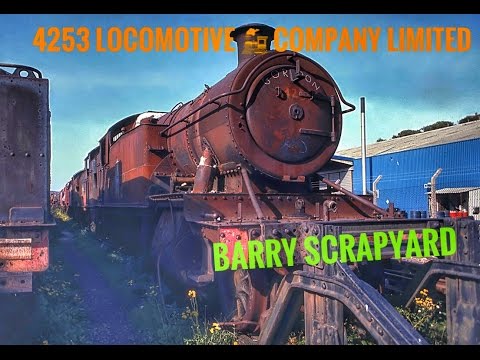
This locomotive, was built at Swindon in 1926 and spent its working life in and around Cardiff Valley hauling both freight and passenger trains. Like many others, 5668 ended up sold to Woodham’s scrap yard at Barry in November 1964 as steam was phased out in favour of diesel. It languished there, slowly losing parts, until rescued and moved to the Pontypool & Blaenavon Railway in 1987. A very similar story to that of GWR 4253.
Towards the end of 2012
The kent and East Sussex Railway offered this locomotive as part of a package deal involving a substantial quantity of parts that were required to progress the restoration of 4253.
The agreement was that The 4253 Locomotive Company Limited would undertake the restoration of 5668 but that no work would commence until such time as 4253 had been completed and returned to steam.
At the 2013 AGM, shareholders voted in favour of proceeding with the deal and suggested an appeal be launched to raise funds to pay for the transportation of the loco from Blaenavon to Rolvenden. In excess of £2.6k was raised and, in late 2013, 5668 was moved to its new home.
Although no restoration work will begin for some years, it is important that the loco does not deteriorate
5668 was moved to Rolvenden yard where it was cleaned up and greased as necessary to provide some protection.
It has now been carefully sheeted and returned to Wittersham Road siding for storage to await its turn to be bought back to life.
As a result of this deal our railway, the Kent & East Sussex, will be assured that yet another powerful steam locomotive will be added to its fleet in due course to haul passenger trains on the extended line from Tenterden to Robertsbridge
It was of 3 ft (914 mm) narrow gauge, relatively unusual amongst British narrow gauge railways. It operated from 1895 until 1939, connecting Rye to the coast. It was about 13⁄4 miles (2.8 km) in length, and had three stations - Rye, Golf Links and Camber Sands. It operated mainly to transport golfers to the golf links and holidaymakers to the coastal dunes.
3⁄4 miles (2.8 km) in length, and had three stations - Rye, Golf Links and Camber Sands. It operated mainly to transport golfers to the golf links and holidaymakers to the coastal dunes. The railway was constructed between January and July 1895 and ran entirely on private land. It was the first designed by consulting engineer Colonel Holman F. Stephens, who went on to build and run small railways all over the Country.
The line was built to convey golfers to the Rye Golf Club and ran from Rye station to the golf club. In 1908 the first extension to Camber Sands station was opened and the intermediate station renamed "Golf Links". Camber terminal was moved to a more accessible site and a tea hut was opened at the end of summer 1938, but this only used for a few months as the war intervened the next year.
Although initially quite successful, increasing competition from automobile and bus transport eventually caused the tramway to enter a gradual economic decline, as was the case with many small railways. Passenger service was ended at the outbreak of World War II but it was extensively used by the Government to convey parts for the P.L.U.T.O. (Pipe Line Under The Ocean) project for which a special siding leading to a new pier near Golf Links Station was constructed by Canadian troops.
The line was in such a run-down a condition by the end of the war that it was deemed irrecoverable and was sold for scrap in 1947. The Rye & Camber Tramways Co. Ltd was liquidated in February 1949. Remains A number of relics, including the frame and bogies of one of the carriages, can be seen at the Colonel Stephens Museum at Tenterden. Golf Links station building survives virtually intact. Some track is embedded in concrete near the station as the trackbed was used as a roadway during wartime. Most of the route is a footpath, although a short section has been destroyed by gravel workings. The line plays a prominent part in several novels by Rye resident E.F. Benson.
Built for the United States Army Corps of Engineers as No 1968, and sent to the UK under Lend-Lease. Stored at Newbury Racecourse. One of fourteen purchased by the Southern Railway and sent to the Melbourne Military Railway for running in. Entered service with the Southern Railway in November 1947 as USA Class number 65. Renumbered 30065 by British Railways. Worked at Southampton Docks. Withdrawn, and entered Departmental service as DS237 at Ashford Wagon Works. Withdrawn in April 1967 and sold to Woodham Brothers, Barry, Wales in March 1968. Developed a hot box en route and dumped at Tonbridge. Sold to K&ESR in August 1968 and delivered the next month. arriving at Rolvenden a month later became DS 237 No. 22.
No. 22 was the first large locomotive in service in 1974, proving itself very capable of hauling five coach trains up Tenterden bank. She was fitted with an extended bunker and a improved lubrication to overcome its bearing problems. In 1978 it exchanged boilers with No. 21 and after overhaul re-entered service in April 1981 in black livery lined out in red. Various mechanical problems occurred and were overcome before the boiler certificate again expired and the locomotive was taken out of traffic at the end of the 1990 season. Another extensive overhaul followed, the locomotive re-entering service as Southern Railway No. 65 in the summer of 1997. Its original post-war livery of black with sunshine lettering was now carried. However by 2002 a new firebox was required. This was fitted and a further overhaul undertaken the engine returning to service in 2008. has been withdraw service on 1st January 2017 when its boiler certificate expired
The K&ESR owned two Terriers, the first bought in May 1901 and the second in February 1905, becoming No.3 “Bodiam” and No.5 “Rolvenden” respectively. Both were from the initial batch of six engines, four of which eventually came to Stephens’ railways. “Rolvenden”, the former LB&SCR No.71, had the honour of being the first Terrier built. “Bodiam”, although having the first number of the batch as LB&SCR No.70, was actually the last, having bequeathed her cylinders to 71, when a faulty casting had delayed her introduction into service (strange how these sisters were twinned from birth).
from the framemeplease collection
Both engines were painted in Stephens’ favourite blue livery with red lining, but without a polished dome. With regular overhauls, including that of “Bodiam” at Eastleigh in 1919 and “Rolvenden” at Brighton in 1917, they gave excellent service until the depression years.
from the framemeplease collection
They were alike as two peas for much of their lives together even to the near simultaneous acquisition of three rail coal bunker extensions (the LB&SCR extensions had four); the only difference being a long-strapped A1X type door carried by “Rolvenden”, probably acquired at Brighton. Although the two Ilfracombe Goods engines acquired in 1910 and 1914 became the favoured engines, the Terriers were the mainstay of the line in the Edwardian era, and much used thereafter.
Both engines seem to have received their last partial re-tube in late 1928, with “Bodiam” falling into disuse around the time of the railway’s receivership in 1931. (There is photographic evidence of her apparently in steam questionably dated as 12th September in that year.) “Rolvenden” seems to have lasted a little longer. They were then dumped in the works yard but “Bodiam” was resurrected in 1933 and repaired over the next two years, mainly by a Southern Railway fitter at weekends. Although much reported, there is little evidence, apart from anecdotal, to suggest that she incorporated many major parts from her sister, except possibly her tanks.
However some Terrier parts most certainly came from the Shropshire & Montgomery Terriers mentioned below. In the process “Bodiam” acquired her enlarged and distinctive bunker. Re-entering service on 27th December 1934, she was repainted in a bright apple green with yellow lining and, according to Austen’s usual practice, lost her nameplate becoming simply No.3, with the company’s initials appearing on the tank side above the number. Officially withdrawn in 1937, the hulk of “Rolvenden” was finally disposed of by T W Ward in October 1938.
from the framemeplease collection
“Bodiam” was replaced by a hired Terrier when its boiler gave out in September 1940. She was out of use until repaired in February 1943 with an A1X pattern boiler and smokebox. She may also have been fitted at this time with the S&MR’s Dido’s tanks acquired in 1941 (see below). Re-boilering was a difficult job for Rolvenden Works, so two K&ESR fitters undertook the work at St Leonards Shed under wartime’s cooperative arrangements. Finished in April 1943 the engine became to all intents and purposes an A1X, whilst retaining the sandboxes on the front splasher like some earlier Isle of Wight rebuilds. Some reports suggest that she did not return home until 7th March 18944 but this cannot now be verified. Further repairs were carried out at Brighton Works in September 1947 where she was repainted a darker green. After Nationalisation, the
engine was taken into British Railways’ stock and further repaired at Ashford in the second half of 1949; remarkably she was repainted again in apple green with yellow ling but as British Railways No.32670.
From then on she worked on the K&ESR until dieselisation; then working at Newhaven and elsewhere [including Hayling Island] with occasional returns including the last day special. She returned in 1964, to preservation – a true living embodiment of the continuity of the K&ESR – on whose metals she has been present for all but 9 of its 105 years of operation.
Thanks to Colonel Stephens Archives at the Kent and East Sussex Railway
The Hawkhurst Branch Line was a short railway line in Kent that connected Hawkhurst, Cranbrook, Goudhurst and Horsmonden with the town of Paddock Wood and the South Eastern and Medway Valley lines, a distance of 11 miles 24 chains (18.19 km).
The line was promoted by the Cranbrook and Paddock Wood Railway (C&PWR), which was incorporated in 1877, but took until 1892 to open the first section of the line to Hope Mill. Services were worked by the South Eastern and Chatham Railway (SECR). The line was extended to Hawkhurst in 1893. In 1900, the SECR absorbed the C&PWR. Sunday services ceased in 1917. In 1923, the SECR was absorbed into the Southern Railway at the Grouping. The line became part of British Railways at Nationalisation on 1 January 1948. The line was closed in June 1961, before the Beeching Report was published.
The construction between 1842 and 1853 of the Ashford to Hastings Line, the Tonbridge to Hastings line and South Eastern Main Line between Redhill and Folkestone left a triangle of land within the Kentish High Weald devoid of rail communication. It was a heavily wooded and agricultural area which comprised many small villages and hamlets. The three largest settlements in this area were Cranbrook; the former heart of the defunct Wealden cloth industry, Hawkhurst and Tenterden. There were no large landowners or wealthy industrialists to promote a branch line, while the local railway company - the South Eastern Railway (SER) - preferred to wait until local enterprise had funded the route's construction.
A variety of abortive schemes were proposed, including an 1864 proposal by the nominally independent Weald of Kent Railway to run a route from Paddock Wood to Hythe via Cranbrook for which the SER obtained parliamentary authorisation as a defensive measure against a similar scheme proposed by the rival London, Chatham and Dover Railway. The SER's enthusiasm for the scheme waned after the financial collapse of its rival in the wake of the 1866 Overend Gurney crisis. It was left to another independent company, the locally promoted Cranbrook and Paddock Wood Railway, to revive the scheme in 1877 and pursue it for a further 15 years before its opening in October 1892. The company was incorporated on 2 August 1877.
Construction
The Cranbrook and Paddock Wood Railway obtained authorisation for a single track line to link the two towns from which the company took its name. Agreement had been reached with the SER that it would provide £50,000 towards construction costs once the local company had raised £25,000 in the district. The necessary funds could not be raised and by April 1878 only £11,000 had been found and, on the suggestion of the SER, it was decided to save costs by locating Cranbrook station in Hartley, 2 miles (3.2 km) from Cranbrook's centre, where land prices were higher. Preliminary construction works were commenced in 1879 but soon ground to a halt due to a lack of funds. Undissuaded, the railway company obtained two further Acts of Parliament in 1882 and 1892 which authorised a "cut-price" route between Goudhurst and Hawkhurst.
Current Running Number: -Owned By: Privately ownedStatus: Awaiting restoration
Built: BR Darlington 1964
Train Heat: Boiler (isolated)
Current Livery: - Train Brake: Dual (air & vac)Current Name:Works number DEL174/1961.
Allocations
D7594 was new to Nottingham (16A) on June 3rd 1964. Further transfers were: July 1964 to Derby (16C).
January 1965 to Nottingham Division (D16).
March 1967 to London Midland (Midland) Lines.
June 1968 to Longsight (9A).
June 1968 to Manchester Division (D09).
May 1973 to Longsight.
August 1975 to Eastfield.
January 1982 stored serviceable, then reinstated to Eastfield during the same month.
October 1982 to Longsight.
May 1984 to Cricklewood.
November 1984 to Crewe.
Withdrawn July 28th 1986. Renumbered October 30th 1973.
The Colonel Stephens Railway Museum records the career of Holman Fred Stephens, light railway 🚃
The Colonel Stephens Railway Museum records the career of Holman Fred Stephens, light railway promoter, engineer and manager, his family, his railways and his successors.
The museum is based at Tenterden station on the Kent & East Sussex Railway, which was the quintessential Stephens' light railway and was always the heart of his empire.
The collection began in the 1960s largely through the foresight of Philip Shaw, the Kent and East Sussex Railways Historian, who began putting aside items donated by former employees of the Stephen's empire. W H Austen junior in particular, was a considerable source of material, much of which he had inherited from his father.
Hidden behind the public display is the heart of the research section, the historical papers and undisplayed artifacts dating from about the 1880s occupy 20 steel cabinet filing drawers and some 60 metres of racking.
The photographic archive is considerable, though seldom are we given original negatives. Although never counted, there are probably somewhere between 3,000 and 4,000 photographs, the earliest of which were in the Colonels collection.